About 238 minutes
Armenia and the Armenians: A List of References in the New York Public Library — Inside the Classic
Fantasy Juvenile Worlds
54,558 recorded words. 0 minutes difference from this book's estimate.
View Gutenberg source #52371
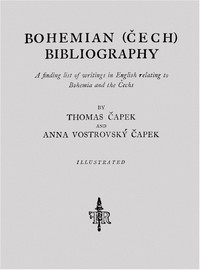
This digital edition of Bohemian (Cech) Bibliography A finding list of writings in English relating to Bohemia and the Cechs — Story, Setting & Ideas is described by source-level measurements including 54,643 words, 3 hr 58 min estimated reading time, and 9 detected text sections.
The text analysis averages about 12.4 words per sentence, while the detected sections provide another way to judge how the source is divided.
Project Gutenberg metadata also associates the work with “Bohemia (Czech Republic) -- Bibliography,” connecting these edition facts with the source record’s subject description.
Explore this collection
These alternatives are selected using recorded categories and estimated reading time.
About 238 minutes
Fantasy Juvenile Worlds
54,558 recorded words. 0 minutes difference from this book's estimate.
View Gutenberg source #52371About 246 minutes
Fantasy Juvenile Worlds
56,414 recorded words. 8 minutes difference from this book's estimate.
View Gutenberg source #55068About 218 minutes
Fantasy Juvenile Worlds
50,054 recorded words. 20 minutes difference from this book's estimate.
View Gutenberg source #71466Search stored excerpts and compare books → Choose by your preferences →
Choices use stored catalog measurements. Estimates vary with reading speed. A shared category is a catalog label, not a claim that two books have the same argument or literary quality.
Search reads excerpt text stored with this catalog and links to its associated Gutenberg record. The connection is stored in the site database; this tool does not recheck that every excerpt is word-for-word identical to that external record. Excerpt search does not cover every chapter and does not verify historical publication dates.
Catalog snapshot checked: 2026-09-25. Coverage: 92 public books, 92 available source excerpts.
Read the complete public-domain text at its original source.
Read on Project GutenbergThis bibliography, compiled by Thomas Čapek and Anna Vostrovský Čapek, opens with a note on Bohemian pronunciation and a detailed contents list spanning twenty-four chapters, from Art and Biography to Politics and Travel. The editors frame their work as a “finding list” for English materials, yet the prefatory matter—including advertisements for Čapek’s own Bohemia under Hapsburg Misrule—signals a dual purpose: to document and to advocate. The excerpts reveal a compendium that is both reference tool and cultural intervention, assembled during World War I when Czech national aspirations were gaining international attention.
The bibliography’s organization is itself a statement. Chapters proceed from Art and Bibliography through History, John Hus, and Komenský, then to Language, Politics, and Sociology. This sequence implies a narrative: cultural achievement leads to religious and intellectual foundations, which underpin modern political claims. The inclusion of “Bohemia in British State Papers and Manuscripts” as a final chapter underscores the editors’ effort to anchor Czech history in Western archival evidence. Each entry is terse—author, title, publisher, date—but the cumulative effect is to present Bohemia not as a peripheral region but as a subject with a coherent, documented past.
The compilers’ voice emerges in small but telling choices. Entries for periodicals like The Bohemian Voice and The Bohemian Review appear alongside academic journals, placing émigré publications in the same evidentiary field as the Westminster Review. Annotations are rare, but when they occur—as in the note on the Queen’s Court manuscript as “a collection of old Bohemian lyrico-epic songs”—they carry evaluative weight. The bibliography’s tone is scholarly, yet the selection of materials, including poems adapted to American tunes and translations by Czech-American figures, reveals a network of diaspora intellectuals working to make Bohemian culture legible to English readers.
The bibliography’s pace is determined by its alphabetical and chronological arrangement within chapters. A reader moving through the “Language and Literature” section encounters Sir John Bowring’s 1828 review alongside Thomas Čapek’s 1892 article, then jumps to Svatopluk Čech’s “Songs of the Slave” translated in 1908 and 1912. This juxtaposition creates a layered timeline, where earlier efforts at cultural translation sit beside later, more politicized works. The density of entries—sometimes several per page, sometimes a single long title—forces a stop-and-start rhythm, mimicking the uneven terrain of available English sources. The bibliography does not smooth over gaps; it lets them stand.
Readers should approach this bibliography as a period document as much as a reference tool. The compilers’ choices—what to include, how to categorize, which publications to highlight—reflect the priorities of Czech-American intellectuals in 1918. For researchers, the value lies not only in the entries themselves but in the patterns they reveal: which topics attracted English-language attention, which translators were active, and how Bohemia was framed for an audience presumed to know little about it. The bibliography rewards browsing as much as targeted searching.
There are afternoons when I think of that 1918 Bohemian bibliography—how its careful annotations held a nation’s longing between covers. Such patience reminds me of another compiler’s devotion, tracing every fragment of a restless spirit through A bibliography of the writings of D. H. Lawrence — Background and Themes. Two quiet acts of gathering, each whispering: someone was here, and someone cared enough to keep the record.
Answer a few questions and save a private reflection on this device.









