About 147 minutes
William Caxton — A Reader’s Guide
Adventure Picaresque Fiction
33,748 recorded words. 2 minutes difference from this book's estimate.
View Gutenberg source #55919
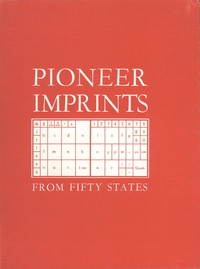
The catalog record for Pioneer Imprints from Fifty States — Background and Themes provides practical reading context through 33,178 words, 2 hr 25 min estimated reading time, and 7 detected text sections.
The text analysis averages about 19.4 words per sentence, while the detected sections provide another way to judge how the source is divided.
Project Gutenberg metadata also associates the work with “Library of Congress,” connecting these edition facts with the source record’s subject description.
Explore this collection
These alternatives are selected using recorded categories and estimated reading time.
About 147 minutes
Adventure Picaresque Fiction
33,748 recorded words. 2 minutes difference from this book's estimate.
View Gutenberg source #55919About 168 minutes
Adventure Picaresque Fiction
38,450 recorded words. 23 minutes difference from this book's estimate.
View Gutenberg source #37072About 113 minutes
Adventure Picaresque Fiction
25,818 recorded words. 32 minutes difference from this book's estimate.
View Gutenberg source #38552Search stored excerpts and compare books → Choose by your preferences →
Choices use stored catalog measurements. Estimates vary with reading speed. A shared category is a catalog label, not a claim that two books have the same argument or literary quality.
Search reads excerpt text stored with this catalog and links to its associated Gutenberg record. The connection is stored in the site database; this tool does not recheck that every excerpt is word-for-word identical to that external record. Excerpt search does not cover every chapter and does not verify historical publication dates.
Catalog snapshot checked: 2026-09-25. Coverage: 92 public books, 92 available source excerpts.
Read the complete public-domain text at its original source.
Read on Project GutenbergRoger J. Trienens's Pioneer Imprints from Fifty States proceeds alphabetically by state, each section opening with a concise statement on the origin of printing in that territory. The narrative voice is consistently that of a bibliographer: precise, restrained, and attentive to physical details of the imprints—missing leaves replaced in facsimile, the size and position of type compartments on a printer's case, or the exact wording of a legislative resolution directing document distribution. Trienens rarely speculates; when he reports that the Library of Congress released a complete file of the Arkansas Gazette for exchange in 1953, he adds the regretful note without further commentary, letting the fact stand.
Trienens structures the book as a series of independent state entries, yet a cumulative narrative emerges: the westward migration of printers. William E. Woodruff, a Long Islander who apprenticed at Sag Harbor, carried his press from Franklin, Tennessee, to the Post of Arkansas, where he began publishing the Arkansas Gazette in 1819. The author traces similar journeys for other early printers, noting the equipment they transported and the towns where they settled. This pattern—apprenticeship in an established print center, then relocation to a frontier territory—recurs throughout the volume. Trienens does not explicitly argue for a thesis, but the evidence he assembles suggests that printing spread not by chance but through deliberate movement of skilled craftsmen who often served as official territorial printers. The entries for states such as Illinois and Missouri reinforce this impression, as the author records the names of printers who moved from one territory to another, sometimes following the shifting boundaries of newly organized regions.
Each section includes a provenance note when available, revealing how the Library of Congress acquired its earliest specimens. The entry for Illinois, for example, records that the volumes were purchased in June 1902 from the Statute Law Book Company in Washington, together with a volume of Illinois session laws, for a combined price of $225. Such details are typical: Trienens names sellers, dates of acquisition, and sometimes the condition of the items. He also notes when copies are imperfect—missing leaves replaced in facsimile—or when the Library deaccessioned material, as with the Arkansas Gazette file released for exchange after microfilming. These provenance statements do more than satisfy bibliographic curiosity; they document the Library's collecting priorities and the practical decisions that shaped its holdings. The author refrains from evaluating these decisions, presenting them as matters of record.
Trienens frequently quotes from the imprints themselves, especially territorial laws and legislative resolutions. The extended quotation from an Arkansas assembly resolution of October 1820 specifies exactly how printed laws were to be distributed: to the governor, secretary, judges, clerks, sheriffs, justices of the peace, constables, prosecuting attorneys, and other officials. The language is bureaucratic and precise, listing each recipient category. By reproducing such passages, Trienens allows the reader to hear the administrative voice of the early territories—a voice that dictated not only the content of laws but the material means of their dissemination. The resolution also names William E. Woodruff as official printer, confirming his appointment. These quotations serve as primary evidence for the relationship between government and the press in frontier America, a theme the author develops through accumulation rather than explicit argument.
Readers approaching Pioneer Imprints from Fifty States should treat it as a reference work best consulted by state, but the cumulative effect of reading straight through is a quiet revelation: the spread of printing across the United States was a concrete, logistical achievement, driven by individuals who carried type and paper into territories where no press had gone before. Trienens's method—letting the bibliographic record speak—rewards patience. Pay attention to the footnotes, which often contain the most telling details about the survival and provenance of these fragile early imprints.
The rain against the window made the Library of Congress’s Pioneer Imprints feel like a map of whispers, each state’s first page a fragile echo of some wanderer’s press. That afternoon, I drifted from those cramped colophons into the broader chaos of ideas, landing almost by chance on The Project Gutenberg Encyclopedia, Volume 1 of 28 — Story, Setting & Ideas, and the two began, quietly, to converse.
Answer a few questions and save a private reflection on this device.









