
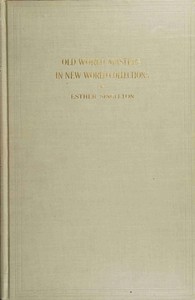
Old world masters in new world collections by Esther Singleton
Published in 1909, Esther Singleton's book is less a traditional story and more a fascinating guided tour through one of the greatest art shopping sprees in history. She acts as our detective, tracing the paths of European masterpieces as they were uprooted from their homes and shipped across the Atlantic.
The Story
Singleton focuses on the Gilded Age, that period in the late 19th century when American industrialists like J.P. Morgan, Henry Clay Frick, and Isabella Stewart Gardner had more money than they knew what to do with. One thing they did with it was buy art—not just any art, but the most famous, prestigious, and expensive Old Master paintings they could find. Singleton shows us how these collectors, often with the help of savvy dealers, scoured Europe. They bought directly from cash-strapped aristocrats, outbid museums at auctions, and essentially vacuumed up centuries of artistic heritage. The 'plot' is the movement of these treasures: from Italian villas, French chateaux, and English estates into the new, lavish mansions and purpose-built museums of America.
Why You Should Read It
What makes this book so engaging is its focus on the people and the process. It’s about the thrill of the hunt. You get a real sense of the personalities involved—the driven collectors wanting instant cultural legitimacy, the cunning dealers playing matchmaker, and the often-reluctant European sellers. Singleton doesn't get bogged down in heavy art analysis. Instead, she gives us the backroom drama. It makes you look at museums like the Met or the Frick Collection in a whole new light. You realize those serene portraits and biblical scenes have backstories filled with negotiation, rivalry, and staggering sums of money. It’s a foundational chapter in the story of American culture, told with clear-eyed curiosity.
Final Verdict
This is a perfect read for anyone who loves museum-going, history, or tales of incredible wealth and power. It’s for the person who stares at a painting and thinks, 'But how did YOU get here?' While the writing style is of its time (it's over a century old, after all), Singleton's research and narrative drive keep it compelling. You won't get deep art criticism here, but you will get a brilliant social history of art as a commodity. If you've ever enjoyed a biography of a Rockefeller or Vanderbilt, or wondered about the origins of America's great art collections, this book is your origin story.
Legal analysis indicates this work is in the public domain. Use this text in your own projects freely.
Carol Brown
4 months agoText is crisp, making it easy to focus.
Patricia Young
1 year agoHelped me clear up some confusion on the topic.







Noah Jones
2 years agoGood quality content.