
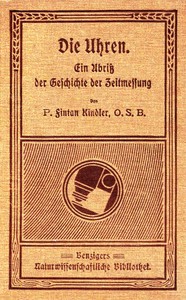
Die Uhren: Ein Abriß der Geschichte der Zeitmessung by Fintan Kindler
Fintan Kindler's Die Uhren (The Clocks) is a journey through humanity's long and complicated relationship with time. Written in the early 20th century, it captures a moment just before timekeeping became fully globalized and digitized, giving it a unique perspective.
The Story
Kindler doesn't just list inventions. He builds a narrative. He starts with our earliest attempts to make sense of days and seasons using the sun, stars, and flowing water. You see the cleverness of ancient Egyptian shadow clocks and Chinese incense timers. The story really picks up in medieval Europe, where mechanical clocks emerged in church towers, their bells organizing entire communities around prayer and labor. The book then follows the clock as it shrinks—from towering public monuments to personal pocket watches—and becomes more accurate. This drive for precision wasn't just for show; it was crucial for science, for navigating the oceans, and for running the factories of the Industrial Revolution. Kindler shows each leap forward as a response to a human need, whether spiritual, economic, or scientific.
Why You Should Read It
What makes this book special is how it connects technology to everyday life. You don't need to be an engineer. Kindler makes you feel the impact. You understand why a farmer might have resisted the rigid schedule of a factory clock, or how the ability to measure longitude at sea saved countless lives. He has a knack for finding the human angle in every technical advancement. Reading it, you start to see the clocks around you not just as tools, but as artifacts of a centuries-long conversation about order, control, and our place in the universe. It gives context to our modern feeling of being 'always on' and perpetually short on time.
Final Verdict
This is a perfect read for curious minds who love 'the history of everyday things.' If you enjoyed books like Salt or Coffee that trace a single item through world history, you'll love this deep dive into timekeeping. It's also great for anyone interested in how technology shapes society. While it's a historical work, its questions about how we live with our inventions feel incredibly current. Just be prepared to look at your watch differently when you're done.
This content is free to share and distribute. Knowledge should be free and accessible.
Nancy Harris
2 years agoIf you enjoy this genre, the plot twists are genuinely surprising. Thanks for sharing this review.
Joseph Lewis
1 year agoI didn't expect much, but the flow of the text seems very fluid. One of the best books I've read this year.
Thomas Moore
3 months agoMy professor recommended this, and I see why.




Daniel Flores
1 year agoGood quality content.