
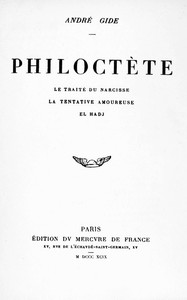
Philoctète : Le traité du Narcisse. La tentation amoureuse. El Hadj by André Gide
This isn't one story, but three distinct pieces that show a young André Gide finding his voice. They're early works, full of big questions and a search for style.
The Story
'The Treatise of the Narcissus' is a poetic, philosophical essay. It uses the myth of Narcissus to talk about art. Gide asks: Is the artist's job to perfectly reflect the world like a mirror, or to create a new, ideal world? It's a debate between reality and the artist's beautiful illusion.
'The Lover's Attempt' is a short story about love and manipulation. A young man tries to orchestrate the perfect romance with a woman he admires. He plans every conversation and gesture, treating love like a project. Of course, real feelings and human unpredictability crash his carefully laid plans. It's a cringe-worthy and funny look at how we try to control the uncontrollable.
'El Hadj' is the most mysterious. It follows a prince on a pilgrimage. He's seeking spiritual truth but gets lost in sensual pleasures and strange visions. It's a parable about losing your way while searching for meaning, set against a haunting desert landscape.
Why You Should Read It
I love this book because it feels honest. This isn't the polished, Nobel Prize-winning Gide yet. This is a young man thinking out loud on the page, experimenting, and being openly confused about life, art, and desire. The themes he touches on here—the selfishness of the artist, the loneliness of love, the hunger for purpose—are things he'd spend his whole career exploring. Reading it is like getting a backstage pass to a great writer's early rehearsals. The prose is often gorgeous, even in translation, and the ideas are challenging in the best way. It makes you stop and think about your own reflections and attempts.
Final Verdict
This collection is perfect for readers who love classic literature but want to step off the beaten path. It's for anyone who enjoys philosophical fiction that doesn't offer easy answers, like the works of Hermann Hesse or early Thomas Mann. It's also a great, bite-sized introduction to Gide if you've been intimidated by his longer novels. Fair warning: it's not a light, plot-driven read. It's a moody, intellectual snack—best enjoyed slowly, with a pencil in hand for underlining the many brilliant, troubling lines.
This masterpiece is free from copyright limitations. Distribute this work to help spread literacy.
Karen Wright
1 year agoThe formatting on this digital edition is flawless.

Andrew Lewis
3 months agoMy professor recommended this, and I see why.