
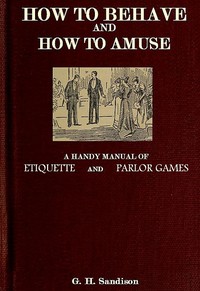
How to Behave and How to Amuse: A Handy Manual of Etiquette and Parlor Games
The Story
This isn’t a novel with characters climbing mountains or solving murders. It’s a guide — a real one from 1893 — that teaches you how not to embarrass yourself at a tea party or croquet match. George Sandison lays out rules for everything: how to enter a room, how to make small talk, even how to fold a napkin. Then, without warning, he dives into a collection of parlor games. The vibe shifts from serious instructions to “If you lose, you must recite a poem on one foot.” There’s no plot. Instead, it’s a world of people trying to be their best most charming selves, while hidden tensions boil beneath lace and manners. The conflict is social disaster, and the mystery? Why did anyone ever think these rules were normal?
Why You Should Read It
I wasn’t expecting to love a book that tells you the correct way to address an earl. But Sandison writes like someone who genuinely wants you to be happy and respected — even if that means memorizing twenty different forks. The fun stuff is when he gets to games. “The Game of the Coach” is basically old-timey charades three rounds in, and “Hunt the Slipper” is pretty smart. I kept imagining a room of corseted folks running around shouting nonsense, and it made the 1800s feel weirdly human. The irony is clear: the whole point is to build confidence, but the rules themselves probably caused a lot of sweaty hand and nervous laughs. That anxious joy is what I took away. It’s perfect for anyone who loves historical quirks, needs clever party trick retorts, or simply enjoys a little cringe nostalgia.
Final Verdict
This book is for history fans, sociology nerds, or people like me who secretly wish dress codes still had meaning besides “wear something shoes.” It’s witty enough that a lunch break skim works, but deep enough that you could discuss the Victorian society power games. Honestly, I might use a few of those old games next time my in-laws look bored.
Legal analysis indicates this work is in the public domain. Access is open to everyone around the world.



George Smith
2 years agoI wanted to compare this perspective with traditional views, the quality of the diagrams and illustrations (if applicable) is top-notch. A solid investment for anyone's personal development.