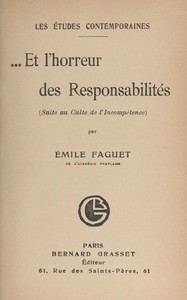
... Et l'horreur des responsabilités (suite au Culte de l'incompétence) by Faguet
This isn't a novel with a plot, but the 'story' here is the logical argument Faguet builds. Think of it as a sequel to his earlier idea. He starts with the premise that society has come to admire incompetence—valuing charm, connections, or ideology over actual skill. This book asks: what happens next?
The Story
The 'plot' is the chain reaction. Faguet traces how worshipping incompetence creates a culture of profound cowardice. If no one is skilled or knowledgeable, then no one wants to be held accountable. He shows how this fear of responsibility spreads from politics into business, the arts, and everyday life. People start avoiding decisions, creating endless committees, hiding behind procedures, and blaming systems instead of themselves. The 'horror' he describes is this collective flinching away from the weight of making a choice and owning the outcome, good or bad. The book is his case study, filled with observations from France's Third Republic, showing how this cycle paralyzes progress.
Why You Should Read It
First, it's not a dry history lesson. Faguet writes with wit and a clear, pointed style. His frustration is palpable, and it makes the reading lively. The real hook is how timeless his diagnosis feels. Swap out the specific French politicians for modern figures, and his points hit home. You'll see echoes of today's talk about 'accountability' and 'leadership' everywhere. It gives you a framework to understand why institutions often feel so sluggish and why decisive action seems so rare. It's less about assigning blame to individuals and more about understanding a social sickness.
Final Verdict
This is perfect for anyone who enjoys political or social commentary, history fans who like to see parallels with the present, or readers who just appreciate a smart, argumentative essay. If you like the idea of Adam Smith's The Theory of Moral Sentiments but with more sarcasm, or Christopher Lasch's The Culture of Narcissism but from a 1900s perspective, you'll get a kick out of this. It's a short, bracing read that will make you look at the news—and maybe your next work meeting—with a new, slightly cynical, but very insightful eye.
Legal analysis indicates this work is in the public domain. Enjoy reading and sharing without restrictions.